.png)


How to Prepare Your Child for Photos at Every Age
Every family wonders how to prepare kids for a photoshoot, and the truth is: the best sessions are the ones that honour who your child really is. Whether you have a curious baby, a strong-willed toddler, or an independent tween, understanding their developmental stage helps set realistic expectations and creates a calm, enjoyable experience for everyone.
As a photographer who works with Edmonton families every week, I design every session using gentle play-based prompts, and a soft, connection-focused approach so your children feel comfortable, seen, and supported.
Below is a guide to how to prepare kids for a photoshoot at every age - with developmentally-appropriate tips, do’s and don’ts, and the kinds of prompts I use to bring out natural, genuine expressions.

How to Prepare your Child for Photos - A Few Ground Rules for All Ages
Avoid telling your child to “smile for the camera.”
This creates pressure and leads to stiff, forced expressions. I’ll guide them gently with prompts that bring out real smiles.
Set realistic expectations.
Toddlers run. Preschoolers test boundaries. Big kids get shy. None of this is a problem - it’s normal and expected.
Your energy matters.
Children mirror your calm, so the more relaxed you and your partner feel, the more relaxed they’ll be.
Fed + rested kids photograph best.
Never underestimate the power of snacks and a good nap.
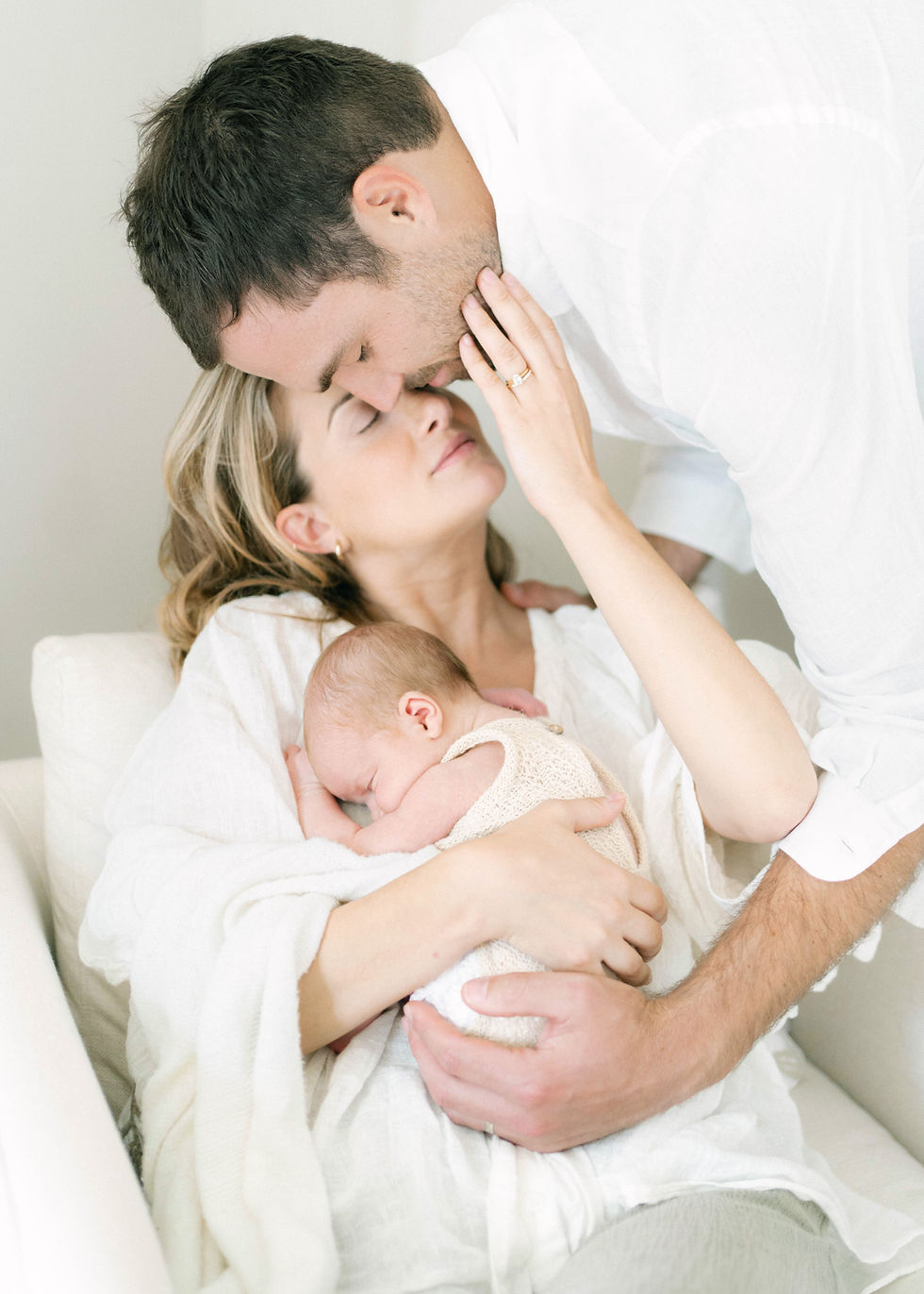
Newborns (0–3 Months)
What’s normal:

Sleepy stretches, startle reflexes, rooting, extra feeds, wanting to be held.
How I photograph this age:
Sessions are slow, soft, and entirely baby-led. We move between feeding, soothing, and swaddling. Parents hold baby often, close snuggles photograph beautifully. Expect the session to take at least 2 and a half hours and enjoy slowing down.
Prompts I use:
Gentle forehead kisses. Rocking and soft sways. Whispering soothing words.
Do’s:
✔ Keep your own energy soft and calm. Newborns mirror your nervous system.
Example: Holding baby against your chest and taking slow breaths helps them settle more quickly.
✔ Expect breaks. Example: If your newborn needs 20 minutes to feed, burp, or settle, that’s built into the experience - there is no rush.
✔ Keep baby warm. Dress them in simple, easy to remove clothing. Example: A zippered sleeper is much easier to slip off than multiple layers, reducing stimulation when transitioning into wraps.
Don’ts:
✘ Don’t stress about crying, cluster feeding or refusing to sleep. The sessions are long because we take our time to make them comfortable. There will be minimal crying at your session because we'll be giving your baby exactly what they need.
✘ Don’t try to keep baby awake beforehand - this just causes them to become overtired and overstimulated.

Babies (4–12 Months)
What’s normal:
Curiosity, big smiles, separation anxiety, short attention spans. Around six months is the perfect time for a
milestone session. They usually don't have separation anxiety at this time and are happy and curious as long as they are fed and not overtired. Closer to 12 months little ones begin having separation anxiety and are more cautious in new places if they aren't being held by a parent. If you'd like photos of your little one at this time - expect to be in them so you're child is more comfortable and happy.
How I photograph this age:
You stay close for reassurance. We play gently and follow baby’s cues. I use lots of silly sounds and peekaboo moments.
Prompts I use:
Peekaboo. Tummy tickles. Nose kisses
Do’s:
✔ Bring snacks and a comfort item. Expect some warm up time. Example: Sitting on your lap while I quietly interact with them helps build trust.
✔ Expect lots of interaction
✔ Do offer simple, non-messy snacks. Example: Small rice puffs or baby-friendly snacks keep energy stable without leaving crumbs or stains on outfits.
Don’ts:
✘ Don’t force them to sit still
✘ Don’t worry if they cling, closeness photographs beautifully. This is developmentally normal and often creates the sweetest snuggled family images.
✘ Expect them to smile for the camera. Babies give the most beautiful expressions naturally.

Toddlers (1–3 Years)
This age is wonderfully busy. Please know: toddlers are not misbehaving - they’re developmentally curious and independent.
What’s normal:
Big feelings, short attention spans, testing boundaries, wanting control, saying "No!".
How I photograph this age:
Sessions are play-based, not posed. I move fast, change prompts often, and keep it fun. We will never force them into a moment
Prompts I use:
Run-and-hug games. “Find Daddy’s ears”. Ring-around-the-rosie. Tickle prompts. Jumping and movement activities
Do’s:
✔ Stay upbeat and calm
✔ Follow their lead. Toddlers aren’t meant to sit still - and their energy is part of the magic.
Example: Running games, tickles, or swinging them between your hands always lead to genuine smiles.
✔ Celebrate cooperation. Children respond so well to praise, and will shut down quickly if you tell them they're doing something wrong. Example: “You’re doing such a good job holding Mommy’s hand!” works much better than “Stop running.”
✔ Do assume breaks are part of the plan. Toddlers often need a moment for a snack, reset, or snuggle. Don't worry about going over the time. I photograph until I have a full gallery - whether that takes 45 minutes or an hour and twenty minutes. There is no rush - what matters is the experience and a beautiful, full gallery.
✔ Have realistic expectations. If you have a two year old boy who loves to run - expect fun, motion-filled images that show off his energy. If you have a more introverted little one who is happier near you or is comfortable in your arms - expect snuggly, emotive images.
✔ Do model the behavior you hope to see. This is the biggest one. Kids mirror you. They can sense stress and will want to be done with the session before it's even started if you are snappier or less patient with them. Example: If you laugh, they laugh. If you relax, they settle.
Don’ts:
✘ Don’t scold. Nothing a toddler does is “bad” - it’s developmentally normal and expected.
✘ Don’t ask for big smiles
✘ Don’t threaten consequences to get cooperation. It shuts down trust and increases anxiety.
Example: Avoid “If you don’t listen, we’re leaving,” and let me guide gently with playful direction.
✘ Don’t expect stillness or tell them to sit still. It rarely works and creates resistance. I use movement-based prompts instead. Movement, real laughs and emotion are the kind of photos you and they will treasure the most when they're older.
✘ Bribe or promise them treats after the session. Telling them they're getting ice cream after photos is a sweet idea but in reality it just makes them want to be done with it so they can get the ice cream! Instead make the photos and spending time, undistracted together the fun event. Tell them we are going on a walk some place new to explore; play in the leaves if it's fall time, throw rocks in the creek in the summer.

Preschoolers (4–6 Years)
What’s normal:
Imaginative thinking, shyness, wanting to please, big bursts of enthusiasm.
How I photograph this age:
I use imagination to keep them engaged. I give gentle responsibilities to help them feel important. Play is still the centre of everything.
Prompts I use:
“Show me your superhero stance.” “Whisper your favourite dinosaur to Mom.” “Red light, green light”
Do’s:
✔ Lean into play. Kids this age thrive on story and play.
Example: “Pretend you’re protecting a tiny baby bunny” gets them to hold their sibling gently without feeling bossed around.
✔ Encourage them warmly. Your energy sets the tone.
Example: “This is so fun!” goes much further than “Just listen to the photographer.”
✔ Let them help. Giving small jobs boosts cooperation.
Example: “Can you be my helper by sitting right here first?”
Don’ts:
✘ Don’t correct them too much. Over-correcting kills confidence.
Example: Instead of “Don’t slouch,” I’ll gently guide posture in my prompts.
✘ Don’t focus on perfect smiles. Natural expressions always photograph better.
✘ Don’t tease them for fears or shyness. Even joking can sting.
Example: “He gets nervous in front of people” often makes kids more self-conscious.
Early School Age (7–9 Years)
What’s normal:
Kids this age are starting to balance confidence with self-consciousness. They may want to look “cool,” have strong opinions about their outfit or hairstyle, and can feel embarrassed easily. They also respond beautifully to connection, humor, and being spoken to respectfully — not like little kids, but not like adults either.
How I photograph this age:
I focus on making them feel capable, seen, and genuinely part of the process. Giving simple choices (“Do you want to sit or stand for this one?”) helps them feel in control, while soft direction keeps the images looking polished. Humor works wonders at this age, and I avoid anything that could feel babyish or forced.
Prompts I use:
“Show me your coolest pose - then I’ll show you mine.” “Walk slowly toward Mom like you’re in a movie scene.” “Look at Dad and tell him the last funny thing that happened at school.”
A mix of soft smiles, looking-away moments, and genuine conversations to capture subtle expression.

Do’s:
✔ Let them choose small details. Instead of laying outfits on the bed and insisting on your favourite, choose two parent-approved options and ask, “Which of these do you feel best in?” This protects your style while giving them autonomy - and confidence photographs beautifully.
✔ Do keep instructions simple and positive. Example: “Let’s keep your hair behind your shoulders so we can see your eyes” works better than “Stop touching your hair.”
✔ Do let me build rapport. Kids warm up quickly when they feel respected and not rushed. If I chat with them about something simple (school, sports, hobbies), trust the process - connection creates cooperation.
✔ Do praise the effort, not the outcome. Example: “You’re doing such a great job listening - thank you,” is much more effective than “Smile nicer for the photo.” Effort-focused praise boosts confidence and reduces performance pressure.
Don’ts:
✘ Don’t call them shy or awkward. Even in a lighthearted tone, kids this age take labels to heart.
Example: Instead of “She’s always awkward in photos,” try “She can be a bit reserved at first, but she warms up.” This keeps their self-esteem intact and sets our session up for success.
✘ Don’t force expressions. A forced “big smile!” leads to tight jaws and uncomfortable expressions.
Example: Instead of “Bigger smile - show your teeth!” allow me to use prompts like “Think of the silliest thing your brother has ever done.”
✘ Don’t over-direct. Too many instructions overwhelm them and create stiffness.
Example: Instead of “Stand straight, shoulders back, chin up, feet together,” let me guide with simple prompts like “Relax your shoulders and look toward Mom.”
✘ Don’t rush them or point out mistakes. Correcting them repeatedly (“Stop fidgeting,” “Don’t do that with your hands”) increases self-consciousness.
Example: If their shirt shifts or hair moves, you or I will quietly fix it rather than calling attention to it.

Tweens & Teens (10–17 Years)
What’s normal:
Heightened self-consciousness, big emotions, wanting independence.
How I photograph this age:
I stay warm, calm, and respectful. Directions are simple and quick. No forced smiles or childish prompts
Prompts I use:
Light movement. Soft smiles. Comfortable poses. Sibling connection moments
Do’s:
✔ Do treat them with maturity and respect. They respond best when they feel spoken to like real people. Example: “Do you like this pose or would you rather try something different?” creates trust.
✔ Do give them quiet reassurance. Even confident teens get nervous. Example: “You look amazing - just relax and be yourself,” goes a long way.
✔ Do allow them input on clothing or hair. When they feel confident, it shows. Example: Letting them choose between two outfits boosts comfort without compromising style.
Don’ts:
✘ Don’t comment on their bodies, height, or weight. Even positive comments can feel uncomfortable or sensitive at this age.
✘ Don’t force overly posed or childish ideas. They want to feel mature. Example: Avoid “Let’s do a silly face!” unless they initiate it.
✘ Don’t overwhelm them with direction. Less is more. Example: Instead of micromanaging hand positions, I use simple prompts like “Relax your shoulders and take a breath.”
✘ Don’t tease them to “break the ice”. Humor should never come at their expense - especially in front of siblings.
Conclusion – Preparing Kids for a Photoshoot Creates Truly Meaningful Images
Understanding how to prepare kids for a photoshoot at every age is the key to creating photographs that feel natural, connected, and true to your family. When you embrace who your children are - curious, shy, silly, wild, or tender - the most heartfelt images unfold effortlessly.
If you’ve always dreamed of photos that mix beautiful portraits with the real personalities of your children at this stage of life, I would love to photograph your family.
Fill out my contact form to begin planning your session: www.caitlinblair.ca/contact


Comments